If you want a hedge that gets tall enough to matter within two or three years, your best options are Thuja 'Green Giant' arborvitae (3 to 5 feet per year in the right spot), Leyland cypress (similarly fast but with a serious disease caveat in humid climates), Photinia 'Red Robin' (about 12 inches per year, great for milder regions), and fast-growing deciduous shrubs like privet or forsythia for areas where you don't need year-round screening. The right pick depends on your climate zone, your light situation, and what the hedge actually needs to do, privacy screen, windbreak, or quick coverage. Pick wrong and you'll spend years coaxing something along that was never suited to your site.
Which Hedging Plants Grow Fast: Quick Privacy Guide
Rachel Hartley
8 Jul 2026
Fast-growing hedges by goal: privacy vs. windbreak vs. quick cover
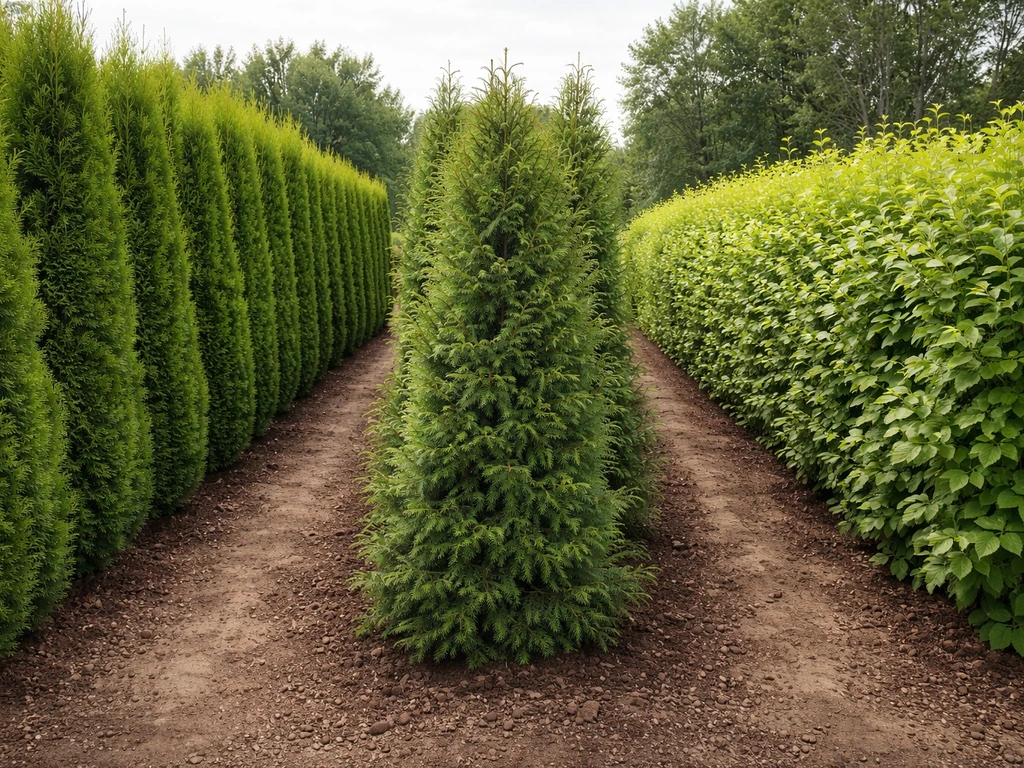
Not all fast hedges are built for the same job, and matching the plant to the purpose saves a lot of frustration. Here's how to think about it:
Privacy screening
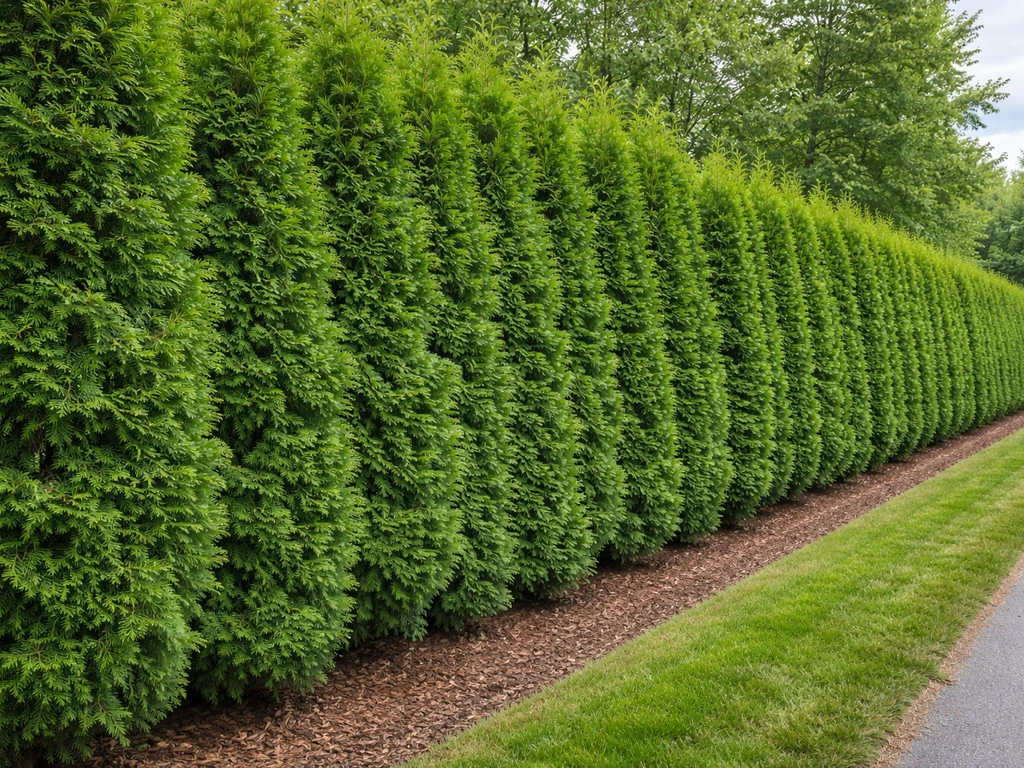
For year-round privacy, you need an evergreen. Thuja 'Green Giant' is the gold standard in most of the US. It grows 3 to 5 feet per year, tolerates heat and humidity better than most conifers, and forms a dense, dark green wall fast. Planted at the right spacing from a decent-sized nursery container, it can give you a functional privacy screen in as little as 2 to 3 years. 'Emerald Green' arborvitae is slower (about 1 foot per year), so go with 'Green Giant' if speed is the priority. Photinia 'Red Robin' works well in milder climates (zones 7 to 9) and produces that distinctive red new growth, but its 12-inch-per-year pace means it takes longer to reach 6-foot screening height. Leyland cypress grows just as fast as 'Green Giant' but has a real disease problem in the Southeast and Mid-Atlantic (more on that below).
Windbreaks
Windbreaks need height and density, and they're usually planted in rows. 'Green Giant' again does well here because of its natural pyramidal shape and branch density. Eastern red cedar (Juniperus virginiana) is a tougher, more drought-tolerant alternative that's excellent for windbreaks in the Great Plains and Midwest, slower than 'Green Giant' but incredibly resilient. For a multi-row windbreak, mixing a taller conifer row with a shrubby deciduous layer (like lilac or native dogwood) gives you better overall wind filtering.
Quick coverage and boundary definition
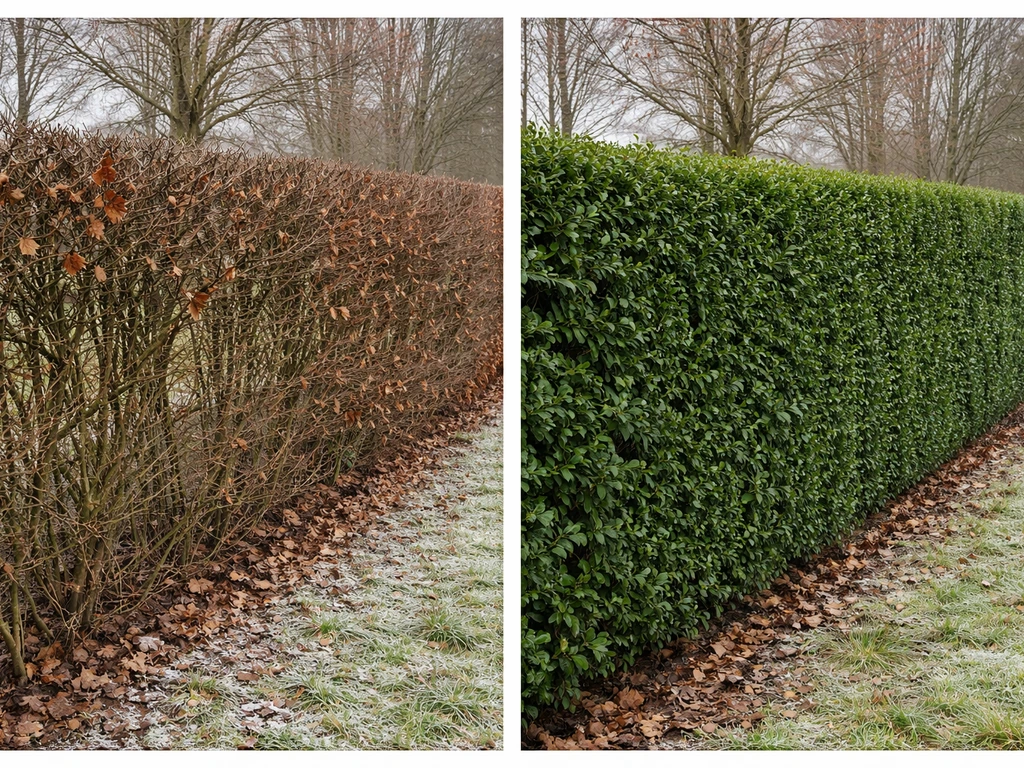
If you just need to define a boundary, create a green backdrop, or fill a gap fast and you don't mind losing leaves in winter, deciduous options open up. Common privet (Ligustrum) can grow 2 to 3 feet per year and responds aggressively to pruning, making it one of the fastest-establishing formal hedges you can plant. Forsythia is similarly fast and gives you that yellow spring show, but it's more of a loose screen than a solid wall. For a quick informal hedge in a naturalistic setting, native elderberry (Sambucus canadensis) fills in remarkably fast and supports pollinators. Just know that deciduous hedges leave you exposed during winter months, which matters if your goal is year-round privacy.
Best fast hedge plants by climate and region
Climate is the single biggest variable. A plant that rockets to 10 feet in zone 7 Virginia might barely survive in zone 4 Minnesota. Use this as your starting point:
| Region / Zone | Best fast hedge options | Notes |
|---|---|---|
| Pacific Northwest (zones 7–9) | Photinia 'Red Robin', Portuguese laurel, Leyland cypress, skip laurel | Mild wet winters suit evergreen broadleafs; disease pressure lower than Southeast |
| California & Southwest (zones 8–10) | Italian cypress, Pittosporum, Podocarpus, Privet | Drought tolerance matters; avoid moisture-hungry conifers |
| Southeast (zones 7–9) | Thuja 'Green Giant', skip laurel, native hollies (Ilex) | Avoid Leyland cypress—canker disease is severe here; 'Green Giant' is the smarter swap |
| Mid-Atlantic & South (zones 6–8) | Thuja 'Green Giant', Nellie Stevens holly, privet | 'Green Giant' thrives; holly gives deer resistance and berries |
| Midwest & Great Plains (zones 4–6) | Eastern red cedar, 'Emerald Green' arborvitae, forsythia | Cold hardiness rules; 'Green Giant' is marginal below zone 5 |
| Northeast (zones 4–6) | 'Emerald Green' arborvitae, 'Green Giant' (zones 5–6), privet, lilac | Deer pressure is a real issue—factor that into your species choice |
| Mountain West (zones 4–7) | Eastern red cedar, 'Emerald Green' arborvitae, native sumac, lilac | Wind hardiness and dry summers matter more than sheer growth rate |
One thing to flag specifically: Leyland cypress is widely sold because it's fast, but if you're gardening anywhere in the humid Southeast or Mid-Atlantic, the Seiridium and Botryosphaeria canker diseases are genuinely destructive. Seiridium canker is identified by UGA Extension as the most important and destructive disease of Leyland cypress in Georgia, with symptoms like yellowing and browning foliage on affected branches Seiridium canker is likely the most important and destructive Leyland cypress disease in Georgia. Extension research from Georgia, Maryland, and Mississippi all point to it as the most significant disease problem on Leyland in those regions. Infections can kill entire trees, and there's no good cure once it's established. 'Green Giant' arborvitae gives you similar speed without that liability. If you're already growing Leyland and it's healthy, keep it. But if you're choosing new plantings in zones 7 to 8 in the East, 'Green Giant' is the smarter bet.
Sun, shade, and soil conditions that actually speed up growth
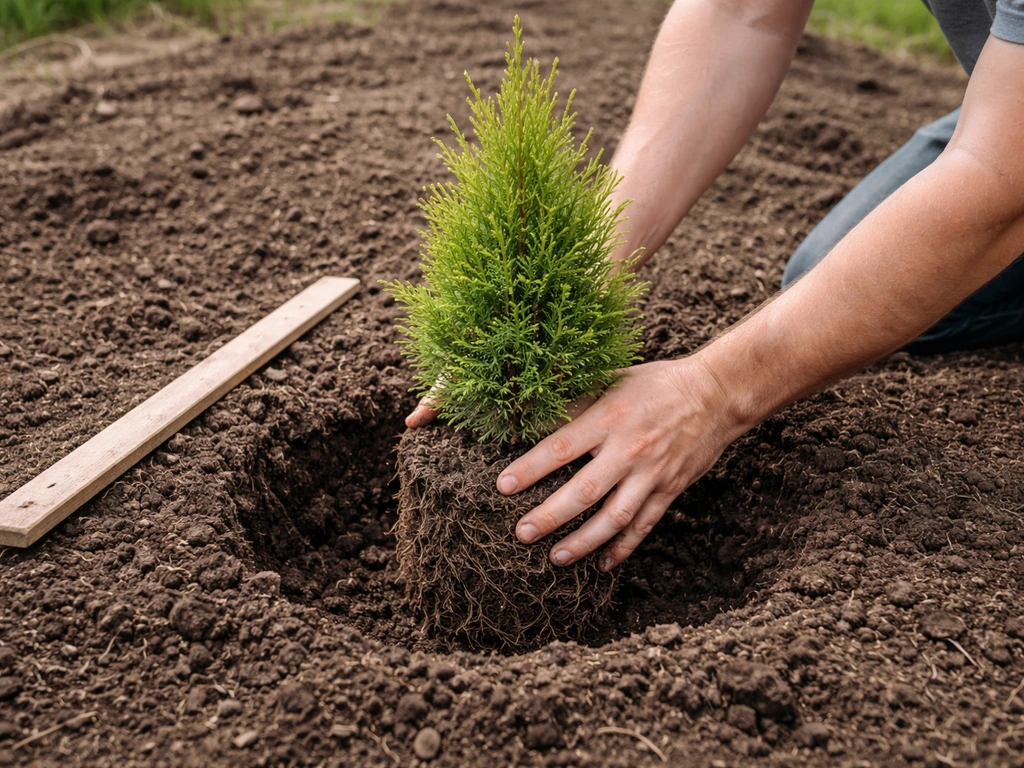
Most fast-growing hedge plants are sun-lovers. Thuja 'Green Giant' needs at least 6 hours of direct sun per day for full speed, you'll get slower, spindlier growth in shadier spots, and the hedge will never fill in as densely. Arborvitae in general does best in full sun but tolerates some light shade. If your hedge line runs along a north-facing fence or under a tree canopy, your conifer options narrow; consider skip laurel or native hollies instead, which genuinely tolerate part shade without sulking.
Soil drainage matters more than most people realize. Arborvitae will tolerate a wide pH range (roughly 6.0 to 8.0), but it will not tolerate waterlogged roots. Roots sitting in saturated soil can't take up oxygen or nutrients efficiently, which directly slows growth and increases disease susceptibility. If your hedge line sits in a low spot that pools after rain, you have three choices: build a raised berm, install a french drain, or choose a plant that tolerates wet feet (like native buttonbush or certain willows for a loose screen). For heavy clay soils, mixing compost into the planting zone, not just the hole, improves both drainage and water retention in the right balance, and research backs this up for improving establishment rates.
Sandy, fast-draining soils are the opposite problem: they dry out quickly, which puts new transplants under constant water stress. Amending with compost helps here too, and mulching becomes especially critical. If your soil is very sandy, you may need to water more frequently during the first two summers than typical guidance suggests.
Planting for speed: spacing, timing, watering, and root prep
Timing your planting
Spring and fall are the two best planting windows, and which one matters more depends on your region. In the North (zones 4 to 6), spring planting after the ground thaws gives roots the full growing season to establish before winter. In the South and Southeast (zones 7 to 9), fall planting (September through November) is often better, summer heat stress is brutal on new transplants, but fall soil temps are still warm enough to drive root growth before the plant goes dormant. In the Pacific Northwest and mild coastal California, fall through early winter planting works well because rain does most of your watering work. Whatever you do, avoid planting in summer heat if you can help it. A mid-July planting in Georgia or Texas is asking for trouble unless you're ready to water heavily every single day.
Spacing: the most misunderstood variable
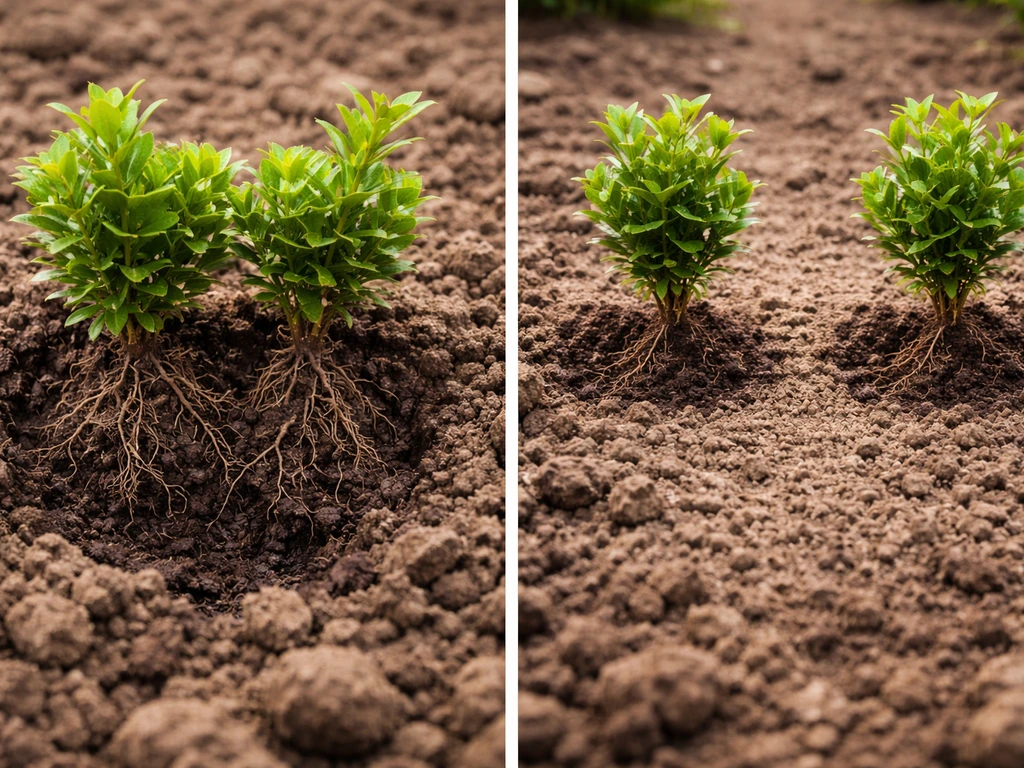
This is where people consistently make two opposite mistakes. The first is planting too close together hoping for faster coverage, what you actually get is competition for water and nutrients, reduced airflow (which invites disease), and plants that grow taller but stay thin and spindly. The second mistake is planting at the ultimate mature-width spacing, which means you're waiting 8 to 10 years for any sense of coverage. For 'Green Giant' specifically, spacing of 5 to 8 feet on center is a good balance: close enough for relatively quick visual screening (2 to 3 years), but enough space for healthy root development and good air circulation. For a more formal, tightly sheared hedge using shrubs like privet or boxwood, you can go tighter, 18 to 24 inches on center, because you're managing width through pruning. Extension guidance from Iowa State reinforces this: match the plant size to the intended hedge height and don't crowd large-growing plants just to get fast coverage.
Root prep and planting depth
Don't plant deeper than the nursery container depth. This is one of the most common planting mistakes, and it slows establishment significantly or kills the plant outright over a few years. The root flare should sit at or just slightly above grade. When you pull the plant from its container, check for circling roots at the bottom, straighten or cut them before planting, or they'll continue circling and eventually girdle the trunk. For balled-and-burlapped plants, remove the burlap, wire cage, and twine from the top half of the root ball once it's in the hole. Backfill with native soil plus compost mixed in (roughly 25 to 30 percent compost by volume is a reasonable guide), firm the soil gently to eliminate air pockets, and water thoroughly right at planting.
Watering and mulching for fast establishment
For the first season, water is everything. New transplants don't yet have the root system to pull moisture from a wide area, so they're entirely dependent on what you give them. A deep watering two to three times per week is far better than light daily sprinkles. You want the water to push down into the root zone, not just wet the surface. Run a hose slowly at the base for 20 to 30 minutes, or use a drip line. By season two, most healthy hedge plants have expanded their root zone enough to need supplemental watering only during dry spells. Apply 2 to 3 inches of mulch (shredded bark or wood chips) along the entire hedge run, keeping it a few inches away from the trunk bases. Mulch conserves moisture, moderates soil temperature, suppresses weeds that would otherwise compete with your hedge, and gradually improves soil structure as it breaks down.
Maintenance to keep hedges growing fast
Pruning strategy: cut to thicken, not just to shorten
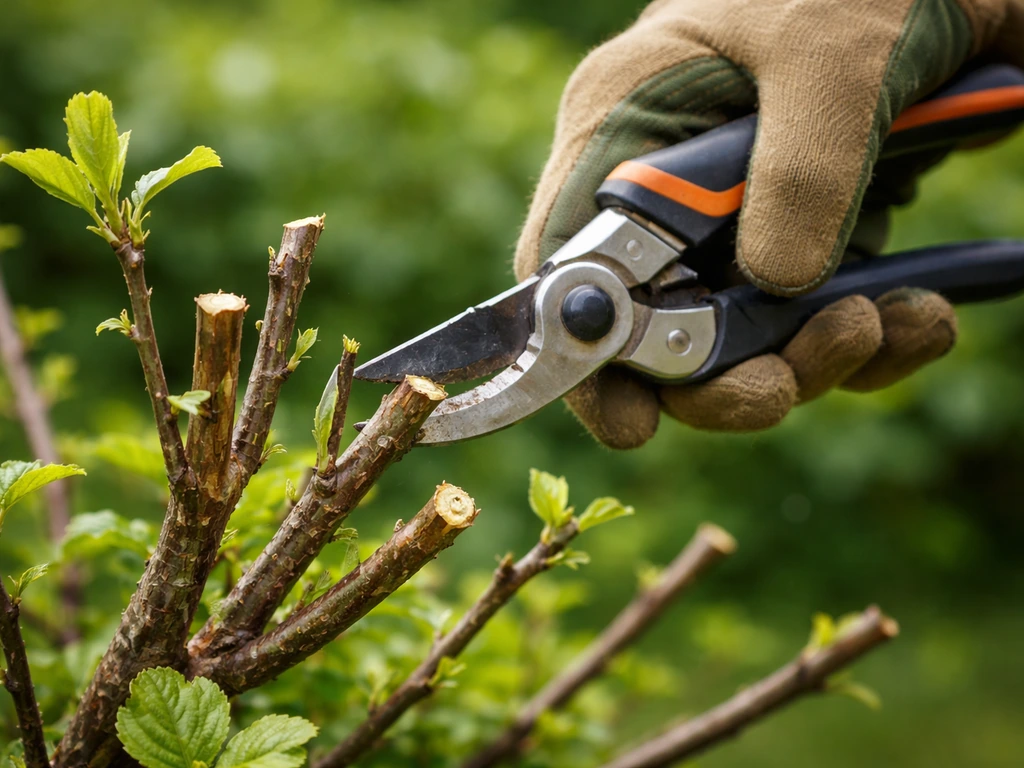
Counterintuitive but true: strategic pruning speeds up the development of a dense, useful hedge. For deciduous shrubs being established as a hedge, cutting them back hard at planting, to within about 6 inches of the ground, forces lateral branching from the base and gives you a much fuller, thicker plant over time. This is a standard recommendation from Oklahoma State Extension for deciduous hedge shrubs, and it really does work. You lose a year of height, but you gain a hedge that's actually dense rather than just a few tall sticks. For evergreen conifers like arborvitae, you don't do this hard cutback, instead, let them grow and focus on lightly trimming the sides in the first couple of years to encourage branching. Once the hedge reaches its target height, switch to a maintenance pruning rhythm: trim new growth back whenever it extends another 6 to 8 inches. This keeps the hedge dense and at the right size without shocking the plant.
One important shaping tip: keep the bottom of the hedge slightly wider than the top. This isn't just an aesthetic preference, it ensures lower branches get enough sunlight to stay alive and leafy. A hedge that's wider at the top shades out its own base over time, leading to a bare, woody bottom that looks terrible and is nearly impossible to fix without starting over.
Fertilizing
For arborvitae and most conifer hedges, fertilize in early spring before new growth flushes. A soil test is the most reliable guide, but if you skip that, a balanced slow-release fertilizer or one slightly higher in nitrogen supports that rapid vegetative growth you're after. Broadcast the fertilizer beyond the drip line and on top of your mulch layer, don't dig it in, which can damage surface roots. Don't over-fertilize. More nitrogen does not mean more growth above a certain threshold; it just creates soft, fast-growing tissue that's more attractive to insects and disease. For photinia and other broadleaf evergreens, follow the same early-spring timing. Boxwood, by contrast, is a slow grower that rarely needs fertilizing unless a soil test shows a clear deficiency, it's not in the 'fast hedge' category anyway.
Pest and disease monitoring
The two biggest threats to fast conifer hedges in the Eastern and Midwestern US are bagworms and spider mites. Bagworm caterpillars hatch around late May and feed through June into late August. University of Delaware research puts the hatch around the end of May; Virginia Tech extension emphasizes that bagworm populations can build rapidly and cause extensive defoliation if you miss the treatment window. Check your arborvitae and juniper hedges in early June, you're looking for tiny, needle-covered bags the size of a pine cone. Treat during mid-June while caterpillars are still small and before bags get large enough to protect them from contact insecticides. By late July, the bags are sealed and sprays won't penetrate effectively. Spruce spider mites are a dry-weather problem: tap a branch over white paper in early spring or late fall and look for moving dots. Miticide treatments or strong jets of water can break infestations early.
For photinia hedges, Entomosporium leaf spot is the main concern, especially in humid areas. University of Maryland Extension identifies it as one of the most common and significant diseases of red-tip photinia. It shows up as small red to maroon spots on leaves, eventually causing heavy defoliation. The fungus thrives in wet weather and spreads via water splash. The best defenses are good air circulation (don't shear photinia too tightly), avoiding overhead irrigation, and cleaning up fallen leaves. Preventative fungicide applications in spring and fall help in high-humidity regions. If your photinia hedge gets hit year after year, honestly consider replacing it with a disease-resistant alternative like skip laurel or native holly.
Fast hedge options for containers and small spaces
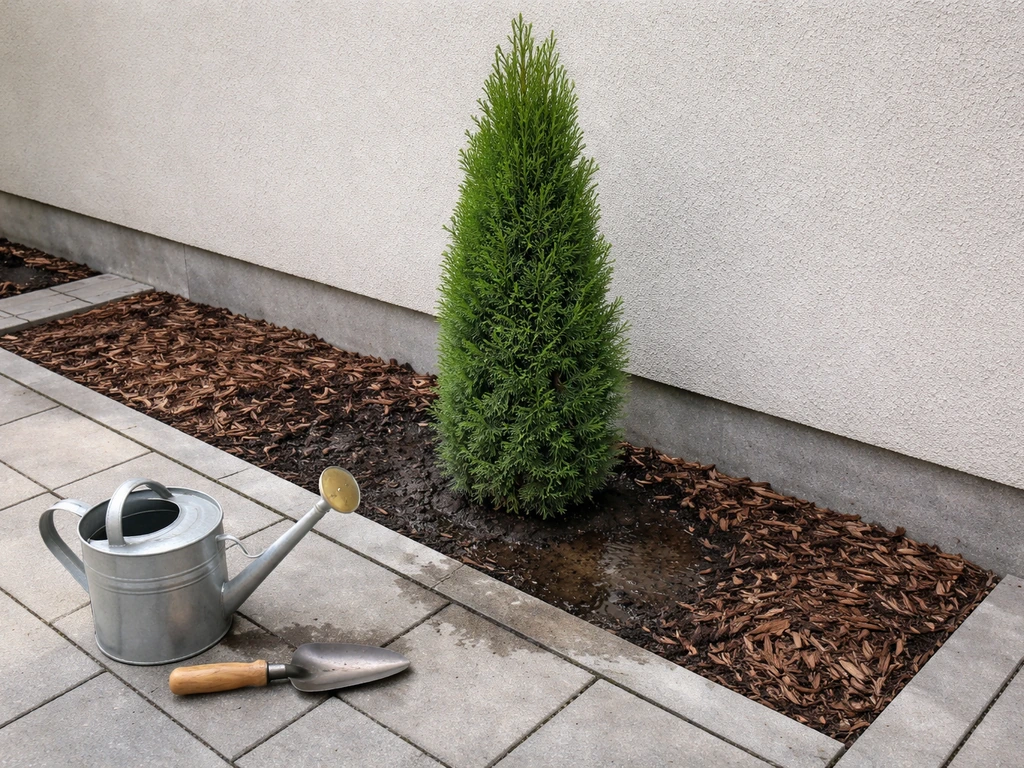
Growing a hedge in containers or in a tight urban space changes the rules. Large conifers like 'Green Giant' are not container plants, their root systems need ground space to support that growth rate. In a container context, you're working with a much more compact palette. The best fast options for container hedging are:
- Sky Pencil holly (Ilex crenata 'Sky Pencil'): columnar form, evergreen, grows to 6 to 10 feet in the ground but stays manageable in a large container; much slower in a pot but gives a clean vertical screen
- Columnar boxwood (like 'Graham Blandy'): formal and slow but very tidy, suitable for flanking entrances or defining a narrow boundary in containers
- Tall feather reed grass (Calamagrostis x acutiflora 'Karl Foerster'): technically not a hedge shrub but grows 5 to 6 feet fast in a container, gives seasonal screening, and is essentially indestructible
- Bamboo in a contained planter: can grow 3 to 5 feet per season in a large pot but requires a solid root barrier if planted in ground to prevent spreading; running bamboo in a confined container is genuinely fast for screening
- Privet in large containers: tolerates hard pruning and can establish a decent screen in a deep planter box within two seasons
For containers, pot size is the main constraint on growth speed. A 15-gallon or larger container lets roots expand enough to support real growth; anything smaller and you'll be watering every day in summer and still get slow, stressed growth. Use a well-draining potting mix, not native soil (which compacts badly in containers), and feed more frequently than in-ground plants since nutrients wash out with every watering.
How long 'fast' really takes: honest expectations
This is the part most nurseries and plant sellers gloss over, so let's be direct. When a retailer says Thuja 'Green Giant' grows 3 to 5 feet per year, that's under ideal conditions: full sun, good soil, consistent water, no major pest pressure, and a healthy, well-sized transplant to start with. Choosing plants that are fast to grow is only half the equation; spacing, sun, and watering determine how quickly your hedge actually fills in. In real-world conditions, including the first year when the plant is mostly growing roots, not height, expect slower results. Year one is largely establishment. Year two you'll see meaningful growth. Year three is usually when things start looking like an actual hedge. Here's a rough guide:
| Plant | Realistic growth rate | Functional screen height (6 ft) | Notes |
|---|---|---|---|
| Thuja 'Green Giant' | 2–4 ft/year after establishment | 3–5 years from 3-gallon container | Faster in zones 6–8; slower in zone 5 |
| Leyland cypress | 2–4 ft/year | 3–5 years | Don't plant in humid Southeast—canker risk |
| 'Emerald Green' arborvitae | ~1 ft/year | 6–8 years | More reliable in cold zones 4–5 |
| Photinia 'Red Robin' | ~12 inches/year | 5–7 years | Zones 7–9; disease risk in humid areas |
| Common privet | 2–3 ft/year | 3–4 years | Deciduous; fast but needs regular pruning |
| Eastern red cedar | 1–2 ft/year | 5–8 years | Very tough; drought and cold tolerant |
| Skip laurel | 1–2 ft/year | 4–6 years | Shade tolerant; zones 5–9 |
Climate plays a major role in where on that range you land. A 'Green Giant' in coastal Virginia in zone 7 with good rainfall will outpace the same plant in zone 5b Minnesota by a wide margin. Deer pressure in the Northeast can wipe out multiple seasons of growth overnight, if deer are a problem in your area, factor in either fencing during establishment or choosing a naturally deer-resistant species like Eastern red cedar or holly. And honestly, if you need a fast hedge this year for a specific deadline (new neighbors, a fence dispute, a renovation), it's worth buying larger container or balled-and-burlapped specimens. A 6-foot 'Green Giant' planted today is already at screening height, you're just maintaining it from that point forward. The extra cost upfront usually beats waiting four years for a 3-gallon plant to catch up. If you are shopping based on wow-factor and cost, you may also want to see which of the most expensive plants you can grow are worth the price.
If you're interested in fast-growing plants more broadly beyond hedging, the same principles around timing, soil prep, and establishment apply across categories. If you want the coolest plants you can grow for speed and success, start by matching them to your climate and giving them a strong first season. The key variables are always: right plant for the climate zone, right light exposure, and a good first season of watering. Get those three right and most fast-growing plants will do what they're advertised to do. Get them wrong and even the most vigorous species will stall.
Your quick-start plan
Here's how to pull this all together into action steps you can take today: Many of the same fast-growing hedge and soil tips above also help you choose the best plants to grow for science experiments, since you can control variables like light, spacing, and watering.
- Confirm your USDA hardiness zone and whether your hedge line is full sun, part shade, or full shade—this alone eliminates most wrong choices
- Choose your plant based on goal: 'Green Giant' for fast evergreen privacy in zones 5–8 (except humid Southeast where skip laurel or Nellie Stevens holly is safer), privet for fast deciduous coverage, Eastern red cedar for windbreaks and cold/dry zones
- Pick your planting window: fall if you're in zone 6 or warmer, spring if you're in zone 5 or colder
- Space 'Green Giant' at 5 to 8 feet on center; shrubby deciduous hedges at 18 to 24 inches on center
- Plant at nursery depth, amend with compost, water deeply at planting, and mulch the full hedge run to 2 to 3 inches
- Water deeply two to three times per week for the first full growing season; reduce in year two except during dry spells
- Fertilize in early spring; check for bagworms in early June and act immediately if you see them
- Prune deciduous hedge shrubs back hard at planting to force dense lateral branching; let conifers grow and only lightly shape sides in years one and two
- Keep the hedge wider at the base than the top to prevent bottom dieback
FAQ
Can I get a fast hedge to look full immediately, or do I have to wait?
Yes, but only if you treat “fast” as a speed-to-cover goal, not a guaranteed height. Look for plants that naturally form dense growth (like arborvitae) and use the spacing that allows airflow. If you need a hedge to function immediately, plan on temporary measures during establishment, such as training the plants with ties, adding a short-term privacy screen (mesh or slat), or using multiple rows.
What pruning style actually makes fast hedges fill in sooner?
It depends on the species and how you prune. For arborvitae, avoid aggressive cutting into bare, old wood and instead do light side trimming once it establishes. If you want quicker density for deciduous hedges, the “hard cut at planting” approach works best in year one, then transition to routine trimming after you see strong lateral shoots.
Why do “fast-growing” hedges still stall after planting?
The best approach is to buy plants that are ready to grow in your conditions and then prevent early stalling. For conifers, prioritize healthy root systems (no circling roots), correct planting depth, and consistent deep watering in the first year. For container hedges, choose a large enough pot (15 gallons or more) and be ready to water more often, because growth speed is limited by water stress in containers.
My hedge line is partially shaded. Will a fast hedge still work there?
If it’s a sun problem, you will usually see slower height, wider spacing between branches, and less density. Repositioning is best, but if you cannot, choose plants that tolerate your light level (for example, alternatives like skip laurel or native hollies for part shade). Also, give them the right watering schedule, because shaded hedges often stay wetter longer, raising disease risk if you water heavily.
What’s the right watering schedule to maximize growth rate?
Yes, but the pattern matters. A hedge needs consistent moisture, so aim for deep, infrequent soakings (in-ground) rather than frequent surface wetting. If using drip, run it long enough to reach the root zone, then check moisture 6 to 12 inches down. In sandy soil, you typically need more frequent watering during the first two summers, even with mulch.
Why does my fast-growing hedge develop a bare bottom even though it’s growing well?
Dead bottom branches are usually from the hedge being too narrow on top or getting shaded as it matures. Keep the base slightly wider than the top and avoid over-shearing that cuts off the lower portion. If the bottom is already bare, you generally cannot “fix” it quickly, and the long-term remedy is correcting the shape and allowing light back into the lower growth.
How much should I fertilize if my goal is maximum growth?
Yes, especially in the first year. Spreading fertilizer too close to the trunk, over-fertilizing with nitrogen, or digging it in can push soft growth that’s easier for pests and disease to exploit. If you fertilize, do it in early spring, broadcast beyond the drip line over mulch, and use a rate that matches the product label or soil-test results.
Can I plant hedges closer together to get privacy sooner?
Don’t automatically assume “more is better” with spacing. Too-close planting creates competition and reduces airflow, which can slow growth and increase disease, even though it looks like you are stacking plants. Start with the recommended spacing for the plant’s mature size and adjust slightly based on your desired look, but avoid crowding as a shortcut to faster privacy.
How do containers change which fast hedges will actually grow fast?
For container hedges, pot size is the main limiter. If you see roots circling, compacted mix, or rapid drying (daily watering in summer), you are likely suppressing growth. Move up to a larger container and switch to a truly fast-draining potting mix, then increase feeding because nutrients leach out more quickly than in-ground.
What should I do if deer are eating my fast hedge?
Deer and other browsing animals can wipe out growth completely, even on the fastest species. The practical fix during establishment is physical protection (temporary fencing, guards on individual plants) and choosing species that are less palatable in your area. If deer pressure is high, plan for at least one full growing season of protection before expecting hedge density.
My soil drains poorly. Which fast hedging choices are realistic?
Yes, some hedges tolerate different soils better than others. For waterlogged or low spots, choose a plant that tolerates wet conditions or fix drainage with a raised berm or drainage system. For heavy clay, mixing compost into the planting zone helps, but avoid burying the root flare. For very sandy soil, consistent watering and mulching matter as much as any plant choice.
If I have a tight timeline, should I buy smaller plants and wait or larger plants now?
If you want the fastest visible coverage for a deadline, buy larger specimens when possible and commit to correct establishment care, because year one is often root-focused rather than height-focused. As a rule of thumb, expect slower visual results than the “per year” marketing number, and if timing is critical, larger plants usually outperform small ones even if growth rates look similar on paper.
Next Article
Best Indoor Plants That Grow Tall: Top Picks & Care Guide
Best tall indoor plants by light, care and season, real heights, potting, pruning, pests, plus a quick picker's guide.