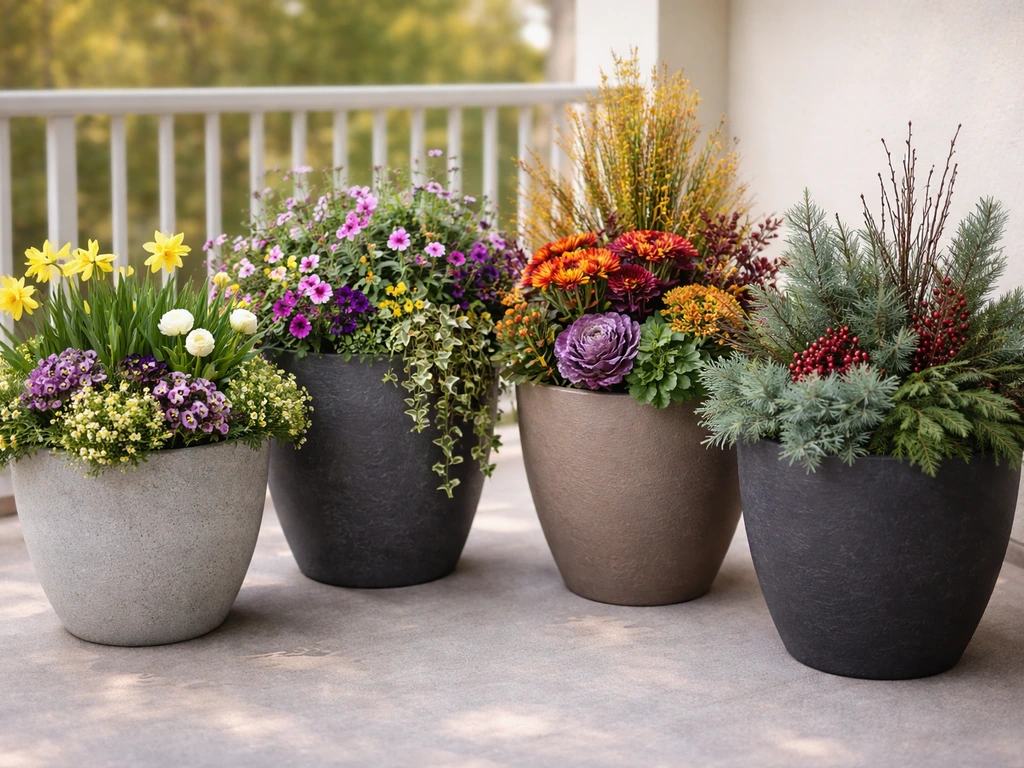
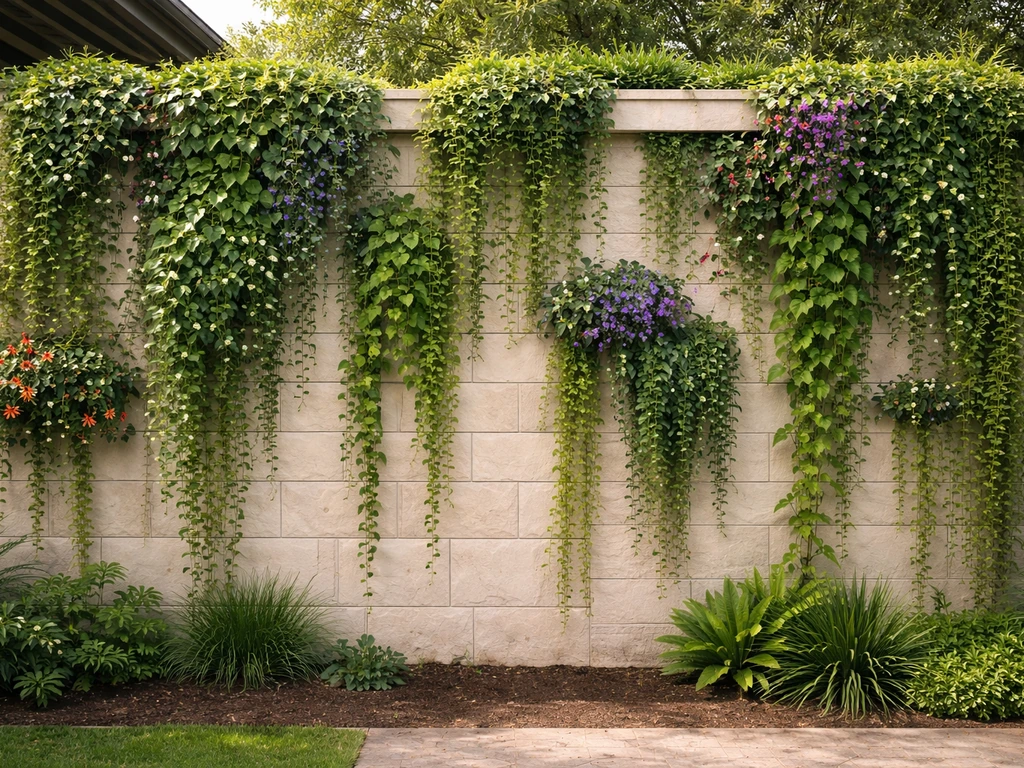
The best plants to grow down a wall are trailing varieties like ivy, creeping jenny, aubrieta, and Campanula poscharskyana, plants that naturally spill and cascade when planted at the top of a wall or in elevated planters. For planter boxes, choose plants with trailing or compact growth that match your light and watering conditions, like ivy or compact herbs what plants grow well in planter boxes. For growing up a wall, clematis, climbing roses, and Virginia creeper are reliable workhorses. And if you want plants actually living inside a wall (in pockets or a vertical system), succulents, ferns, and small herbs handle that beautifully. Which direction you're going, and how much sun, wind, and wall surface you're working with, determines everything about which plant wins and which one dies quietly within a season.
Best Plants to Grow Down a Wall: Practical Guide
Clarify your wall setup before you buy a single plant
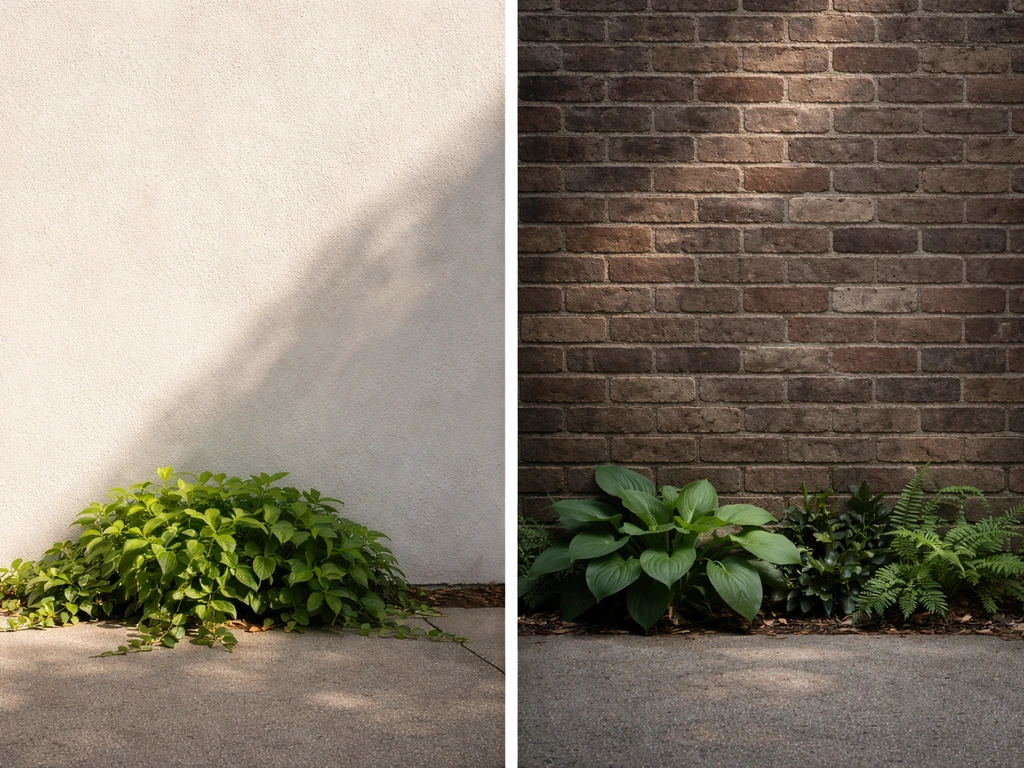
A south-facing wall in full sun and a north-facing brick wall in shade are completely different growing environments, treating them the same is the most common reason wall plants fail. Before you pick anything, answer these four questions about your wall.
- Direction and sun exposure: South and west-facing walls get the most sun and also dry out fastest. North and east-facing walls are cooler, shadier, and stay damper — perfect for ferns and hydrangeas, not for lavender or sun-loving climbers.
- Wall material: Brick, stone, and concrete are fine for most wall plants. Timber or rendered walls are more vulnerable to moisture damage from self-clinging climbers. If your wall has pointing or render you care about, use a trellis with a gap rather than letting plants grip directly.
- Height and support available: Do you have a trellis, wire system, or coping at the top to anchor trailing plants? Or is the wall bare with no hooks? That determines whether you're looking at self-clinging climbers, supported climbers, or trailers from above.
- Wind exposure: A sheltered courtyard wall and a windswept garden boundary are different problems. Exposed walls need tougher, more compact plants — think wall germander or low-growing sedums rather than tall-stemmed climbers that will snap.
- Drainage: Walls that are permanently damp (north-facing, near a slope, poor drainage at the base) suit moisture-tolerant plants. Very dry soil at the base of a wall — common with south-facing walls where rain is blocked by the wall overhang — needs drought-tolerant choices.
One practical note on planting position: if you're growing against a wall rather than from its top, plant about 30–45 cm (roughly 12–18 inches) away from the wall base, not right up against it. That gap lets rainwater reach the roots and gives the root system room to develop without hitting the foundation. This is especially important on south-facing walls where the soil right at the base can be bone dry even after rain.
Best plants to grow down a wall (trailers and creepers)
Trailing plants grown from the top of a wall, from coping, raised beds, or elevated planters, give you that classic cascading effect. If you are working specifically with planters, it helps to start with the best plants to grow in planters so your setup spills, climbs, or fills in with less trial and error. These are the picks that actually perform rather than just looking good on a label.
| Plant | Light | Spread/Height | Best for | Notes |
|---|---|---|---|---|
| Aubrieta | Full sun | Trails 30–60 cm | Sunny dry-stone or brick walls | Evergreen, purple/pink spring flowers, extremely drought-tolerant once established |
| Campanula poscharskyana (Serbian bellflower) | Full sun to part shade | Spreads freely, 10–30 cm tall | Cottage-style walls, gaps in stone | Very easy, self-seeds into crevices, long blue-purple flowering season |
| Creeping jenny (Lysimachia nummularia) | Part shade to shade | Trails 60+ cm | Shaded or damp walls and containers | Golden-leaved form looks excellent cascading; likes moisture |
| Ivy (Hedera helix) | Full shade to full sun | Trails indefinitely | Any wall needing rapid coverage | Extremely tough, but choose compact varieties and prune hard each spring |
| Alyssum saxatile (basket of gold) | Full sun | Trails 30 cm | Hot, dry walls with gaps | Bright yellow spring flowers, great in wall crevices |
| Sedum (stonecrop) | Full sun | Low, 10–15 cm | Dry, sunny walls and wall tops | Near-indestructible, good in shallow pockets and wall tops |
| Trailing rosemary (Rosmarinus prostratus) | Full sun | Trails 60–90 cm | Mediterranean or sheltered walls | Edible, fragrant, needs good drainage — not for cold wet winters |
Campanula poscharskyana is one I keep coming back to for mixed conditions, it genuinely thrives in average soil in full sun to part shade, stays low (typically 10–15 cm, occasionally to 30 cm), and will creep into crevices and over wall edges with almost no help. It looks deliberate without much effort, which is rare. For hot, sunny walls where nothing seems to want to grow, aubrieta and basket of gold are the go-tos, plant them in autumn so they establish before the heat arrives.
Best plants to grow up a wall (climbers that actually deliver)
Climbers are broadly split into self-clingers (attach directly to the wall surface), twiners (need wires or trellis to wrap around), and those that use tendrils or leaf stalks to grip. Knowing which type you're dealing with affects how you support them.
Self-clinging climbers (no trellis needed)
- Virginia creeper (Parthenocissus quinquefolia): Aerial rootlets with adhesive pads grip almost any surface. Stunning autumn colour. Vigorous — needs annual cutting back from gutters and windows.
- Boston ivy (Parthenocissus tricuspidata): Same attachment method as Virginia creeper but slightly neater. Good for large walls where you want full coverage fast.
- Climbing hydrangea (Hydrangea anomala subsp. petiolaris): Slow to get going (give it 2–3 years), but spectacular once established on a shaded north or east-facing wall. Self-clingers via aerial roots.
- English ivy (Hedera helix): Works on almost any wall, shade or sun. Be selective with variety — large-leaved varieties cover fast but are harder to control.
Trellis and wire climbers (the best performers)
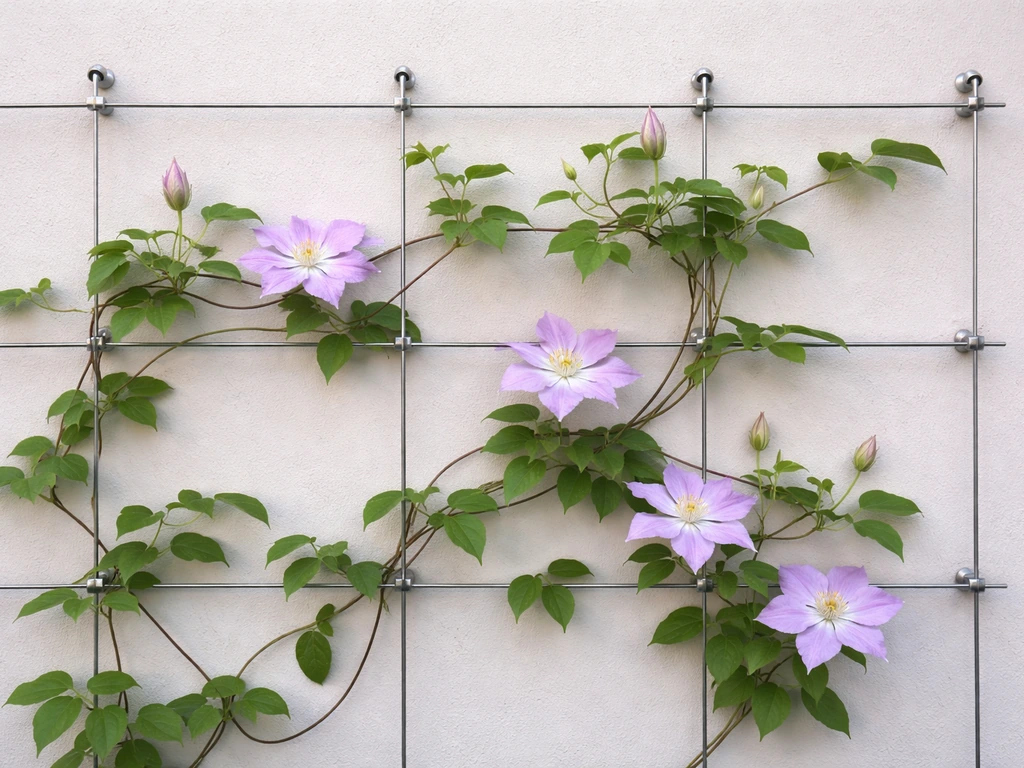
- Clematis: The most versatile climbing genus available. Climbs by coiling its leaf stalks around slender supports — it needs a trellis, wire, or netting to get a grip. Group 2 large-flowered hybrids (like 'Nelly Moser' or 'The President') flower on old and new wood and need light pruning in late winter plus a tidy-up after the first flush in summer. Group 3 varieties (like 'Jackmanii') are cut hard back to about 30 cm each late winter and are the easiest to manage. Match the variety to your wall direction — pale-flowered clematis fade less on sunny walls.
- Climbing roses: Need horizontal wires or a sturdy trellis. Fan the stems out as wide as possible rather than letting them grow straight up — this encourages flowering along the whole stem rather than just at the top. Best on sunny, sheltered walls.
- Jasmine (Jasminum officinale): Fast-growing twiner for sun or dappled shade. Needs trellis or wires. Prune after flowering to keep it manageable.
- Honeysuckle (Lonicera): Twines naturally around supports. Excellent for part shade and is more tolerant of north-facing walls than most flowering climbers. Can get untidy — cut back hard every few years.
- Wisteria: For serious walls only. Incredibly heavy and vigorous — needs a very substantial support framework bolted into the wall. Worth it for the flowers, but never underestimate the weight or the root spread (keep at least 2 metres from foundations).
Plants for walls with no trellis: wall pockets and vertical systems
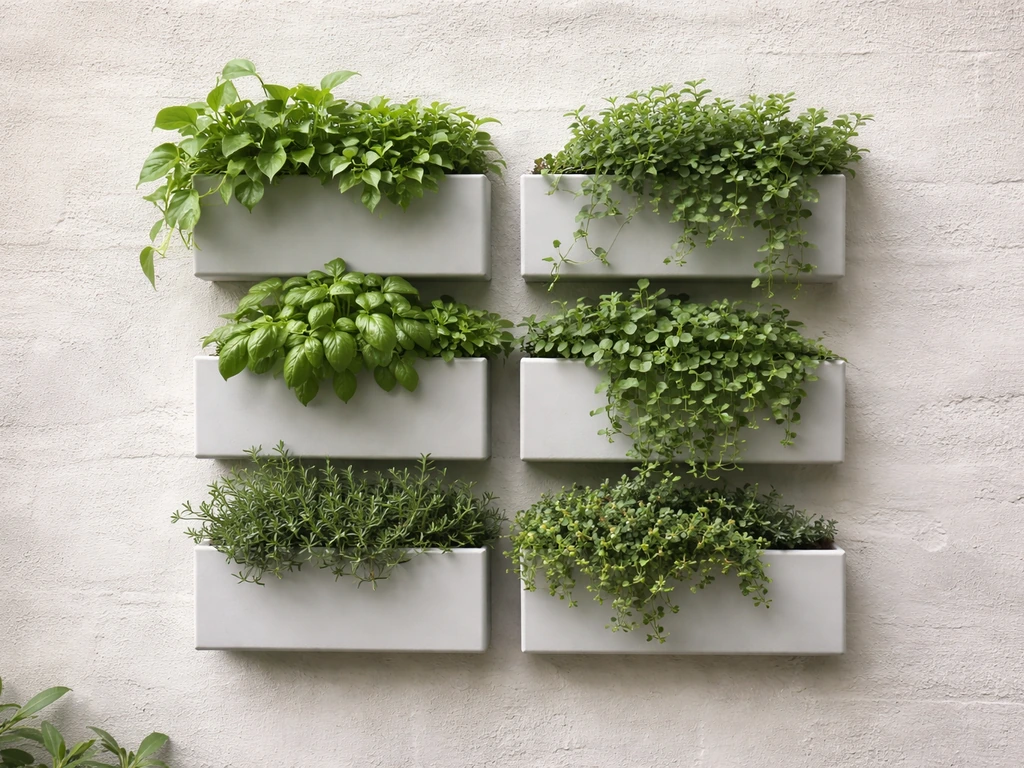
If you want plants actually growing in or on the wall surface rather than climbing it, you're looking at two main setups: natural gaps and crevices in stone or brick walls, and modular living wall systems (sometimes called green walls or vertical gardens) that mount onto the wall face. If you want to compare classic up-and-down climbers with wall pockets and vertical garden systems, see the best plants to grow vertically for more adjacent ideas.
Plants for gaps and crevices in existing walls
Dry stone walls and old brick walls with soft mortar joints are genuinely great growing environments for small, drought-tolerant plants. The drainage is excellent and the walls hold warmth. Plant into these gaps in autumn or spring with small plug plants, pressing the roots into the gap and packing with a gritty compost mix. Good candidates include aubrieta, Erigeron karvinskianus (Mexican fleabane), wall pennywort, red valerian, and stonecrop sedums. Ferns like wall rue (Asplenium ruta-muraria) naturalise beautifully in shadier, damper joints.
Modular living wall systems
Living wall kits use either felt pockets or rigid panel systems mounted on a metal frame. The felt-based systems, like FloraFelt-style kits, use PET felt pockets where roots grow into the felt material itself, and water is delivered from the top and travels down by capillary action. Mississippi State University Extension describes the typical setup as felt attached to plastic sheeting to anchor roots, with irrigation from the top. These systems work well for small herbs, trailing succulents, ferns, and compact flowering perennials. For outdoor walls, plants with shallow root systems and tolerance for variable moisture (including brief drying-out) perform best. When you choose the best plants to grow in vertical gardens, look for species that handle your light, wind, and irrigation style.
- Succulents (echeveria, sempervivum): Ideal for sunny living walls — extremely drought-tolerant and lightweight.
- Ferns (asplenium, polypodium): Best for shaded, north or east-facing living walls. Keep moisture consistent.
- Herbs (thyme, oregano, mint, basil): Work well in sunny wall pockets. Mint spreads aggressively so keep it in individual pockets.
- Strawberries: Surprisingly good in wall pockets — fruit hangs clear of the wall and is easy to pick. Needs at least 6 hours of sun.
- Heuchera: Great foliage colour, tolerates part shade, works well in felt pocket systems.
- Trailing petunias or lobelia: For seasonal colour on a living wall — replace each year.
If vertical garden growing is something you want to explore further, it overlaps with broader vertical gardening approaches, growing in tower planters and stacked containers uses many of the same plant choices and care principles.
How to plant and train wall plants so they grow the right way
Installing a trellis or wire system
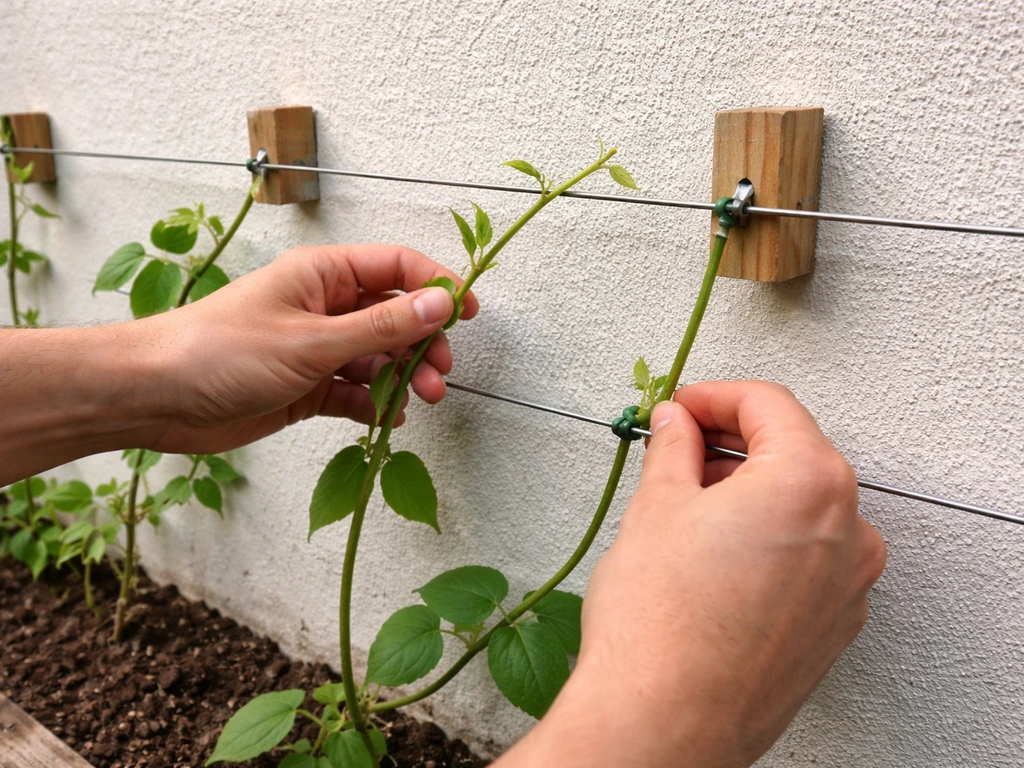
The best approach for most climbers (and anything other than self-clingers) is a trellis or horizontal wire system raised off the wall surface using wooden battens or standoff fixings. This gap between the trellis and the wall serves two purposes: it lets air circulate behind the plant (reducing disease and moisture damage to the wall), and it makes it much easier to tie in stems and train growth. Keep the bottom of the trellis about 30–45 cm above ground level to prevent the base from rotting and to keep it above any damp-proof course. For wisteria or heavy climbers, use substantial galvanised eye bolts and training wires rather than a lightweight trellis.
Training climbers and trailers
The goal with any wall climber is to build a well-spread framework first, then let flowering shoots come off that. For climbers like roses and climbing hydrangea, fan the main stems horizontally as much as possible from the start, tie them to the trellis or wires at 45-degree angles. This triggers far more side shoots and flowers than letting stems run straight up. For trailers growing down from the top of a wall, position the rootball just back from the edge so stems can find the drop naturally, and weight or guide the first few stems over the edge to get things started. Remove any stems growing back toward the wall rather than outward and down.
Once you have a good basic framework established, the RHS recommends cutting out weak, twiggy growth that doesn't contribute to the main structure. This keeps the plant's energy going into the framework stems and their flowering shoots rather than into a tangle of growth that never produces much. For clematis specifically, always identify your pruning group before you cut, cutting a Group 1 clematis hard back in spring will remove all that year's flowers.
Care basics: watering, pruning, and what to do each season
Watering
Wall plants are often drier than you expect, especially those planted at the base of a south or west-facing wall where the wall itself deflects rainfall away from the root zone. Water deeply and less frequently rather than a little every day, this encourages roots to go deep. For living wall systems, overwatering is one of the most common failure modes: the felt or growing medium can stay saturated and roots rot. Check moisture levels before watering rather than running to a fixed schedule. During the growing season (broadly April to October in temperate climates), plan for at least a monthly check of the whole system, soil moisture, any blocked drippers, and any signs of wilting or yellowing.
Pruning by season
| Plant type | When to prune | What to do |
|---|---|---|
| Group 3 clematis (e.g. 'Jackmanii') | Late winter (Feb–March) | Cut all stems back hard to 30 cm above ground |
| Group 2 clematis (large-flowered hybrids) | Late winter, then again post-first-flush (June–July) | Light tidy-up in late winter; remove spent flowering stems after first flush |
| Climbing roses | Late winter + after each flush | Remove dead/crossing stems in late winter; deadhead and cut back flowered shoots through summer |
| Ivy and Virginia creeper | Spring (April–May) | Cut back hard — remove stems from gutters, windows, and any areas encroaching on masonry |
| Honeysuckle and jasmine | After flowering (summer–early autumn) | Cut back flowered stems by a third; remove dead wood |
| Aubrieta and campanula (trailers) | After flowering (late spring–early summer) | Shear back hard by half after the main flower flush to encourage compact regrowth and a second flush |
Seasonal maintenance at a glance
- Spring (March–May): Plant new climbers and trailers. Tie in new growth on established climbers. Prune Group 3 clematis. Feed with a balanced slow-release fertiliser.
- Summer (June–August): Water regularly during dry spells, especially in the first year after planting. Deadhead repeat-flowering climbers. Tie in fast-growing stems before they go where you don't want them.
- Autumn (September–November): Plant new climbers and wall shrubs — autumn planting gives roots time to establish before summer heat. Cut back excessive growth before winter winds cause damage. In cold climates, mulch the root zone of less-hardy plants.
- Winter (December–February): Check trellis fixings and repair anything loose. Plan any major restructuring or replanting. In late winter, prune Group 2 and Group 3 clematis and climbing roses.
Avoid these common problems
Wall damage from self-clinging climbers
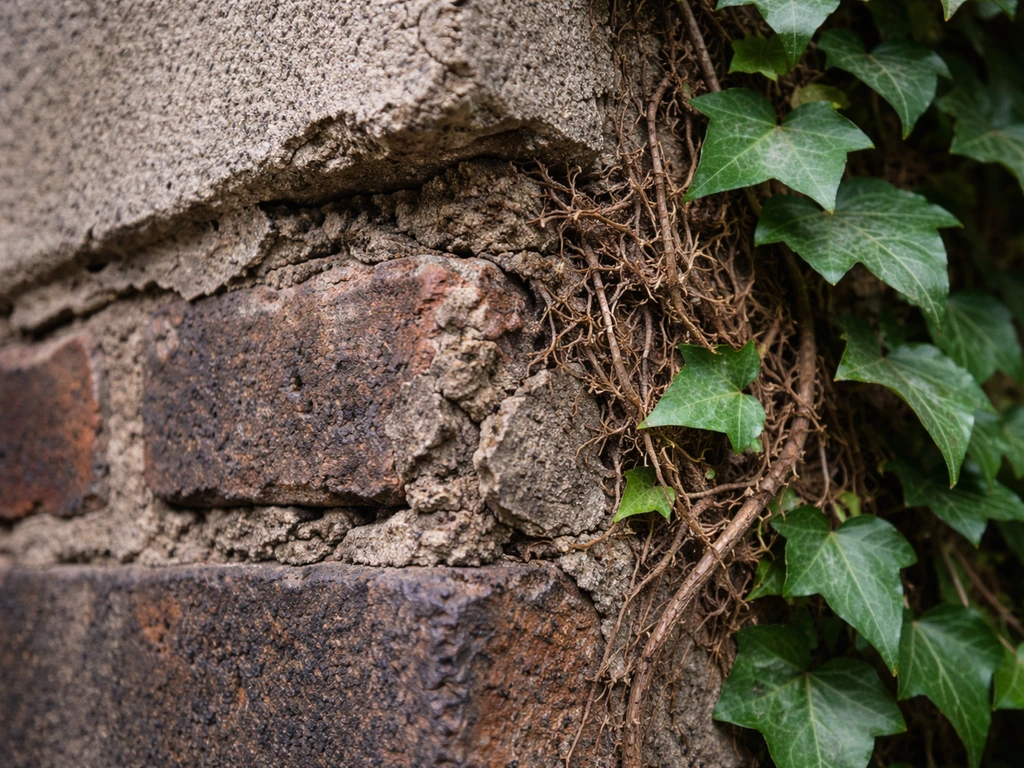
Self-clinging climbers like Virginia creeper and ivy can cause real problems on walls with soft mortar, old pointing, or timber cladding. The rootlets and adhesive pads don't actively break down sound masonry, but they do exploit existing cracks and speed up deterioration in walls already in poor condition. If your wall has any loose pointing, rendered patches, or painted surfaces, use a trellis with a standoff gap instead of letting climbers attach directly. Also keep all climbers well clear of wooden window frames, gutters, and fascia boards, a plant growing into a gutter blocks drainage and causes rot much faster than you'd think.
Invasiveness
A few popular wall plants earn their vigour reputation the hard way. Wisteria roots are powerful enough that you should keep them at least 2 metres from any house foundation, drain, or boundary wall. Russian vine (Fallopia baldschuanica) is sometimes sold as a quick screen, it genuinely will cover a wall in a season, but stopping it is another matter entirely. In the US, English ivy (Hedera helix) is considered invasive in many states and can spread from garden walls into woodland. Check your regional invasive species list before planting anything you plan to let self-seed or spread beyond your wall.
Low-light failure
The most common reason a wall plant looks miserable and barely grows is simply being on the wrong wall for its light requirements. A sun-loving climbing rose on a north-facing wall will survive but produce almost no flowers and be prone to mildew. If you have a shaded wall and want something flowering rather than just foliage, the reliable options are climbing hydrangea, honeysuckle (especially Lonicera japonica), and shade-tolerant clematis like Clematis montana or C. RHS provides a clematis pruning guide organized by pruning groups, with timing and method differences depending on whether clematis flowers on old wood or on current year growth clematis pruning groups. alpina. For trailing plants on shaded walls, creeping jenny, ivy, and ferns are the practical choices, don't try to push sun-lovers into shade and then wonder why they're struggling.
Slow establishment
Most wall climbers follow the old rule: 'first year they sleep, second year they creep, third year they leap.' Climbing hydrangea is even slower to start. Don't panic if a new climber barely seems to move in its first season, it's building root mass underground. The mistake is overwatering or overfeeding in response, which can actually slow things down further. Keep the soil consistently moist (not waterlogged), give a balanced feed in spring, and by year two or three most climbers will be doing exactly what you planted them to do.
FAQ
Can I plant wall climbers directly against the brick or should I always use a gap?
Use a standoff gap whenever the plant is not a self-clinger. Even if the wall looks solid, air movement behind the leaves reduces mildew and helps the wall dry out between wet spells. For self-clingers on soft mortar, avoid attachment entirely, choose a trellis raised off the wall, and keep stems trained outward rather than letting them crowd the surface.
How far from the wall should I place the trellis or wires?
Aim for a 2–5 cm stand-off gap between the wall and the trellis so leaves get airflow and you can tie stems in without scraping the plant against masonry. Keep the bottom rail about 30–45 cm above ground as a practical “damp-proofing” measure to prevent rotting at the base.
What’s the best watering schedule for plants on walls, especially during summer?
Water deeply and less often, then let the root zone dry back slightly before the next watering. Wall soils, particularly at the base of south and west walls, often dry out quickly even after rain. For living wall systems, don’t assume the top looks dry, check the pocket or felt moisture, and avoid a fixed daily routine because over-saturation is a common root rot trigger.
Why are my wall plants growing, but not flowering?
Most often it is the wrong light for the species, or the plant is focusing on framework first. For climbers like roses and many clematis, horizontal training to encourage side shoots matters more than more fertilizer. Also check pruning group for clematis, pruning the wrong way can remove next season’s buds.
Do I need to fertilize wall plants, or will compost be enough?
In many wall situations, a modest spring feed is sufficient because growth is limited by dryness and wind exposure. Use a balanced feed early, then avoid heavy nitrogen later in the season, which can produce lush leaf growth with fewer flowers. If you have vertical garden kits with small root volumes, feed should be lighter and more frequent only if the kit’s irrigation and drainage are clearly supporting active growth.
What should I do if my climber is growing toward the wall instead of outward and down?
Redirect early. Tie stems to the trellis or wires at controlled angles (about 45 degrees) so the plant builds a spread framework. Remove or retrain any shoots that grow back toward the wall surface, those stems shade themselves and can trap moisture, leading to weak flowering.
Which wall type is easiest for plants, brick, stone, or painted/rendered walls?
Dry stone and well-jointed brick with workable crevices tend to be easiest for small pocket plants because drainage is reliable and warmth is retained. Painted or tightly sealed surfaces can be harder for direct “pocket” planting, and self-clingers may worsen deterioration if the surface is already failing. For those walls, a standoff trellis and pocket-style planting in secure gaps is usually safer.
Can I grow plants in wall cracks if the mortar is crumbly?
Avoid forcing plants into unstable, flaking mortar. Weak mortar can crumble further as roots and moisture increase, and you may end up with more damage than greenery. Instead, use small plug planting in sound crevices, or choose a trellis system that keeps roots and attachment points from exploiting weak joints.
How do I choose between a trailing plant down a wall and a living wall system?
Pick trailing plants if you can plant at the top (or in raised planters) and you want a natural spill effect with simpler watering control. Choose a living wall system if you want greenery distributed across the whole wall face where you cannot access the top planting areas, but accept that you must monitor moisture regularly and avoid overwatering. If your irrigation is inconsistent, trailing plants are generally more forgiving.
Are there wall plants that tolerate wind better?
Wind usually dries foliage and dries the root zone faster, so choose tougher species for exposed walls and prioritize airflow management. For vertical systems, select plants described as tolerating variable moisture and shallow root zones, and ensure drippers or capillary delivery are not blocked. If your wall is very exposed, consider less delicate trailing types and avoid very tender ferns.
Is Virginia creeper or ivy a good choice for old walls?
Not if the wall has soft mortar, loose pointing, or timber cladding. Adhesive pads and rootlets can exploit existing cracks and speed deterioration, even if the plant looks harmless. Use a raised trellis instead, keep a gap from window frames and gutters, and train growth so stems do not invade drainage paths.
How fast will my wall climber establish?
Many climbers follow a “sleep, creep, leap” pattern. The first season often looks slow because root growth is the priority. Don’t respond with heavier watering or fertilizer immediately, that can backfire. By year two or three, flowering and visible structure usually increase if light, pruning, and training are correct.
Can I grow wisteria on a wall next to my house or boundary?
Be cautious. Wisteria is vigorous enough that it can cause problems near foundations, drains, and boundary structures, even if it is “just training.” Keep it well away from hard infrastructure and use substantial anchoring hardware, such as heavy eye bolts and robust training wires.
Best Plants to Grow in Planters: Easy Picks by Season
Season and light specific picks for container gardening: best planter plants, soil, watering, feeding, and shortcuts to