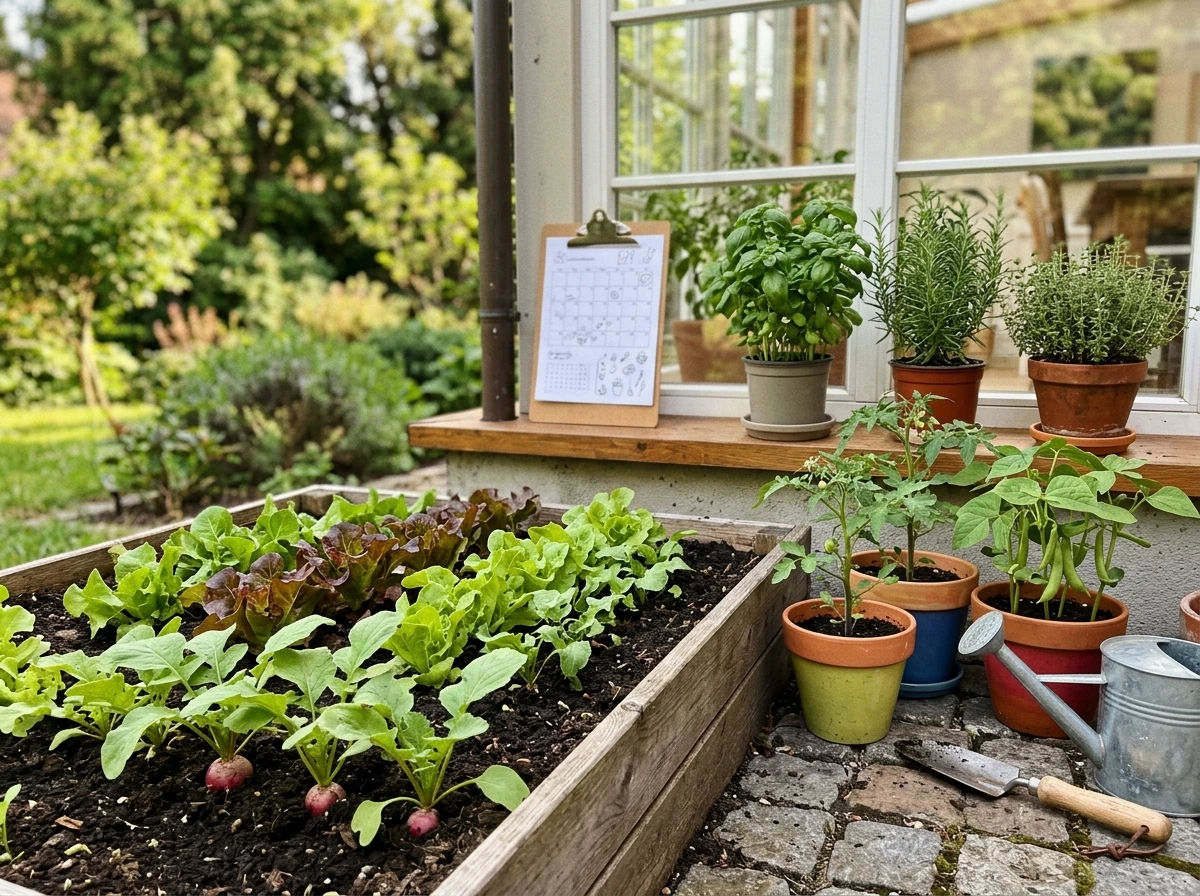
The easiest indoor plants to grow right now are pothos, snake plant, ZZ plant, spider plant, peace lily, and cast iron plant. Those six cover virtually every light level, watering habit, and space constraint a beginner is likely to have. If you want one single answer: start with a pothos or a snake plant. Both are nearly impossible to kill, cost a few dollars, and will tell you a lot about your home's light and humidity before you invest in anything fancier.
Plants That Are Easy to Grow Indoors: Best Picks for Beginners
Rachel Hartley
2 Apr 2026

What "easy to grow indoors" actually means
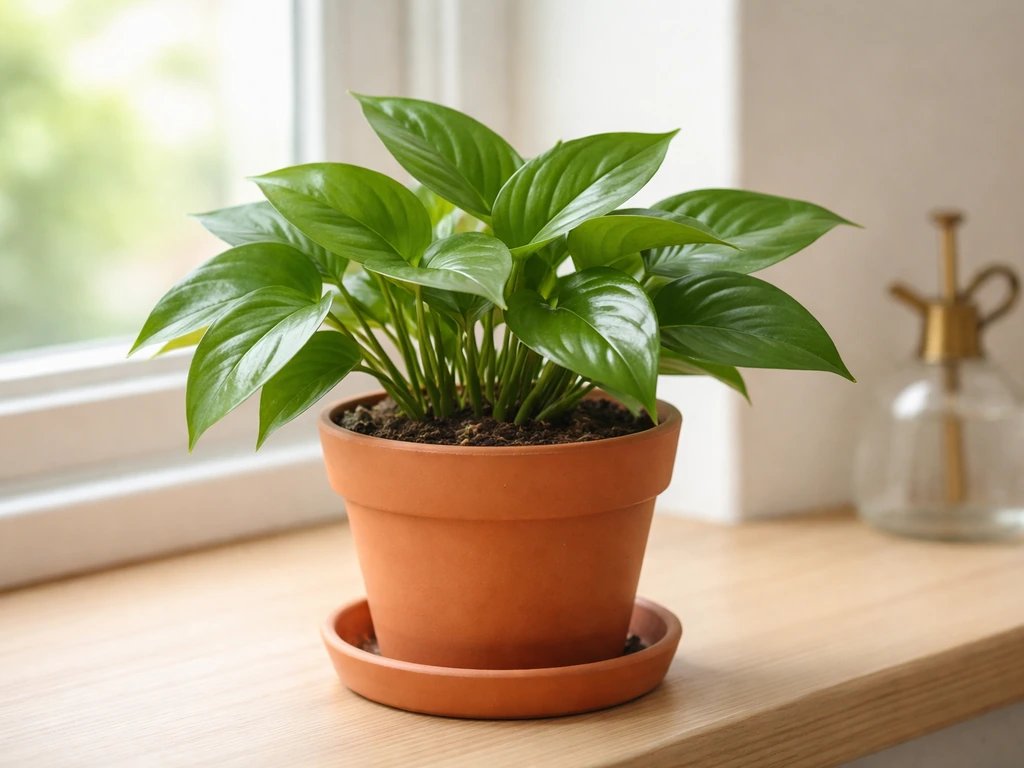
People use "easy" loosely, so let's make it concrete. A genuinely easy indoor plant checks most of these boxes: it tolerates low or indirect light without sulking, it forgives you for missing a watering, it grows in regular potting mix without special amendments, it doesn't need frequent repotting or pruning, it resists common pests, and it does fine in the temperature range most homes stay in (roughly 60 to 80 degrees Fahrenheit). When a plant matches your actual conditions on those dimensions, disease and pest problems become much less likely. Problems almost always start when one of those basics is off, usually light level or water frequency.
The most common beginner mistake is overwatering, and it's worth addressing up front because it looks deceptively like under-watering. Yellowing, drooping leaves are frequently a sign of too much water, not too little. A plant that tolerates irregular watering (meaning it can sit in dry soil for a week or two without damage) is far more forgiving of the natural rhythms of a busy household than one that needs constant moisture. That's a core part of what makes a plant "easy."
The shortlist: easiest indoor plants ranked by effort
Here are the six plants I'd recommend to anyone starting out, ordered from least demanding to slightly more attentive. All of them are widely available at garden centers and grocery store garden sections right now in April, which is actually a great time to buy because stock is fresh and selection is high.
| Plant | Light Needed | Watering Frequency | Best For | Biggest Risk |
|---|---|---|---|---|
| Snake Plant | Low to bright indirect | Every 2–6 weeks | Total beginners, low-light rooms | Overwatering (root rot) |
| Pothos | Low to medium indirect | Every 1–2 weeks | Shelves, hanging baskets, offices | Too little light (loss of variegation) |
| ZZ Plant | Low to medium indirect | Every 2–4 weeks | Dark corners, forgetful waterers | Overwatering |
| Spider Plant | Medium to bright indirect | Every 1–2 weeks | Kids' rooms, fast growers | Fluoride burn on leaf tips |
| Peace Lily | Low to medium indirect | Every 1–2 weeks (droops when thirsty) | Flowering, bathrooms | Cold drafts, direct sun |
| Cast Iron Plant | Low to medium indirect | Every 2–3 weeks | Heat, dust, neglect tolerance | Very slow growth |
The cast iron plant earns its name. It endures heat, dust, low light, and irregular watering better than almost any other houseplant you can buy. The trade-off is that it grows slowly, so if you want to see progress quickly, start with a pothos instead. plants that are fun to grow often include pothos precisely because you can watch it vine across a shelf within weeks of bringing it home.
Matching plants to your actual light level
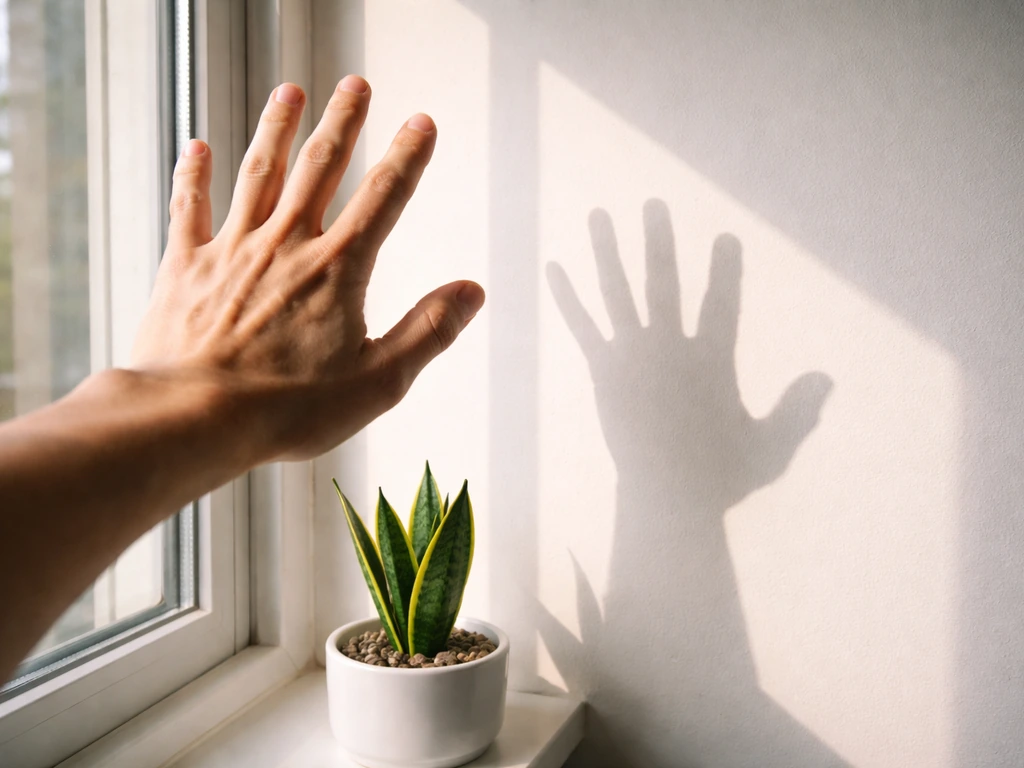
Light is the variable most beginners underestimate. A room that feels bright to human eyes can still be too dim for a plant. Here's a practical way to assess it: hold your hand about a foot above a white piece of paper in the spot where you want to put a plant. A sharp shadow means bright indirect light. A soft, fuzzy shadow means medium light. No visible shadow at all means low light. That tells you more than measuring distance from a window.
Low light spots (no direct sun, far from windows)
Snake plant and pothos are the go-to recommendations here, and for good reason: both are specifically cited as plants that perform in low-light conditions. The ZZ plant and cast iron plant are also excellent choices for darker corners. University of Florida IFAS describes ZZ plants as more tolerant of low light than several other common foliage houseplants The ZZ plant and cast iron plant are also excellent choices for darker corners.. None of these will thrive in zero light (no plant will without grow lights), but they'll hold steady in the kind of dim interior spots that kill most other houseplants.
Medium indirect light (bright room, no direct sun hitting the leaves)
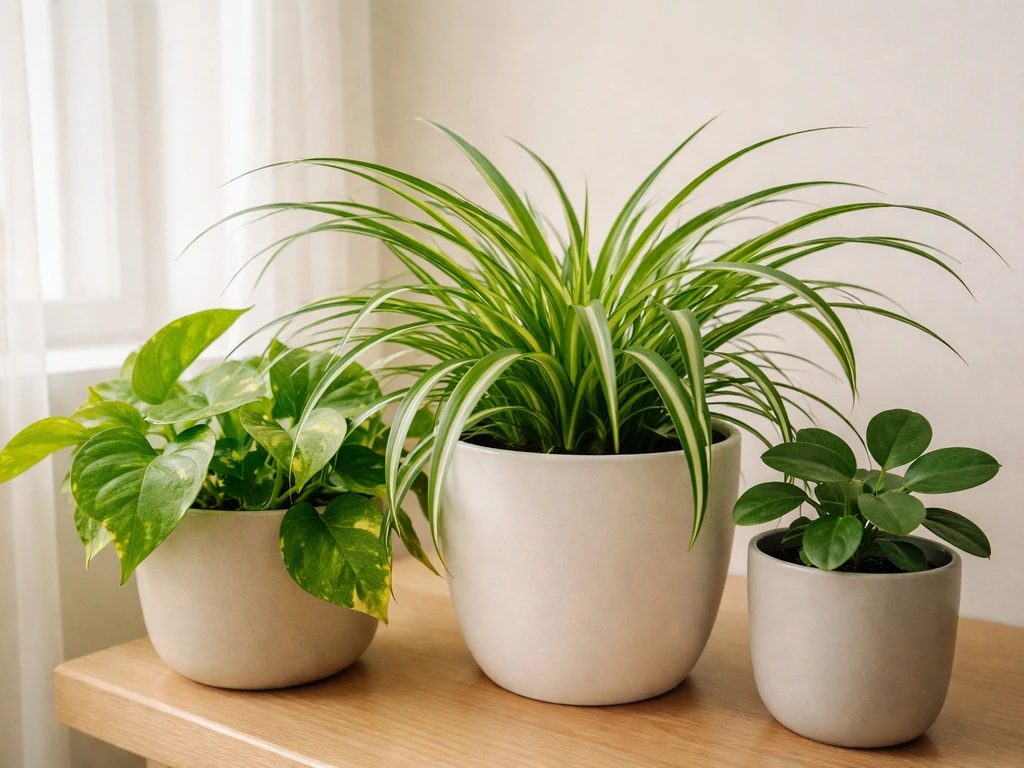
This is the sweet spot for most of the plants on this list. Spider plant, peace lily, and pothos all do particularly well in medium indirect light, which describes the area a few feet from an east- or north-facing window, or well back from a south- or west-facing one. Snake plant also thrives here and will grow a bit faster than it does in a dark corner.
Bright indirect light (close to a window, but no harsh direct rays)
Most of the easy plants on this list appreciate bright indirect light even if they tolerate less. Spider plant and pothos both grow faster and look fuller near a bright window. If you have a sunny south- or west-facing window, just make sure the light is filtered through a sheer curtain or that the plant sits slightly to the side so the leaves don't scorch.
How to care for each of these plants
Snake plant
Water once every two to six weeks depending on season and light (less in winter, more in summer). Use a well-draining potting mix or a cactus/succulent blend. Plant in a pot with drainage holes and empty the saucer after watering. Snake plants are very long-lived when watered correctly, but they will rot fast if left sitting in soggy soil. Let the top two inches of soil dry out completely before you water again.
Pothos
Water when the top inch of soil feels dry, roughly every one to two weeks. Standard potting mix works fine. Pothos tolerates a missed watering well and will bounce back quickly even after wilting slightly. It grows fast in indirect light and can trail or climb depending on what you give it. If the variegated leaves start reverting to solid green, it's asking for more light.
ZZ plant
ZZ plants store water in their thick rhizomes, so they're extremely drought-tolerant. ZZ plants also tolerate low light indoors, but root rot can happen if they are kept in poorly drained soil with too much water for extended periods ZZ plants store water in their thick rhizomes. Water every two to four weeks and let the soil dry out completely between waterings. Well-draining potting mix is all they need. They're slow-growing but virtually indestructible, making them perfect for travel-heavy households or anyone who tends to forget plants exist.
Spider plant
Water every one to two weeks and let the top inch of soil dry between waterings. Spider plants prefer slightly cooler temperatures and do well in regular potting mix. If you notice brown leaf tips, that's usually fluoride sensitivity from tap water. Try letting tap water sit overnight before using it, or switch to filtered water. They produce little "babies" on long runners that are easy to propagate.
Peace lily
Peace lilies are one of the few flowering plants on this list, and they have a built-in watering signal: the leaves droop noticeably when they're thirsty. Water thoroughly when you see that droop, and the plant will recover within an hour or two. Keep them away from cold drafts and direct sun. They prefer slightly higher humidity, so a bathroom or kitchen windowsill suits them well.
Cast iron plant
Water every two to three weeks and let the soil dry almost completely between waterings. This plant is genuinely hard to harm. It tolerates dust, heat, inconsistent watering, and low light without complaining. The only thing it really dislikes is direct sunlight, which will scorch the leaves. It grows slowly, so don't expect dramatic changes week to week, but it will outlast most other plants in your home by years.
The golden rule of watering (it applies to all of them)
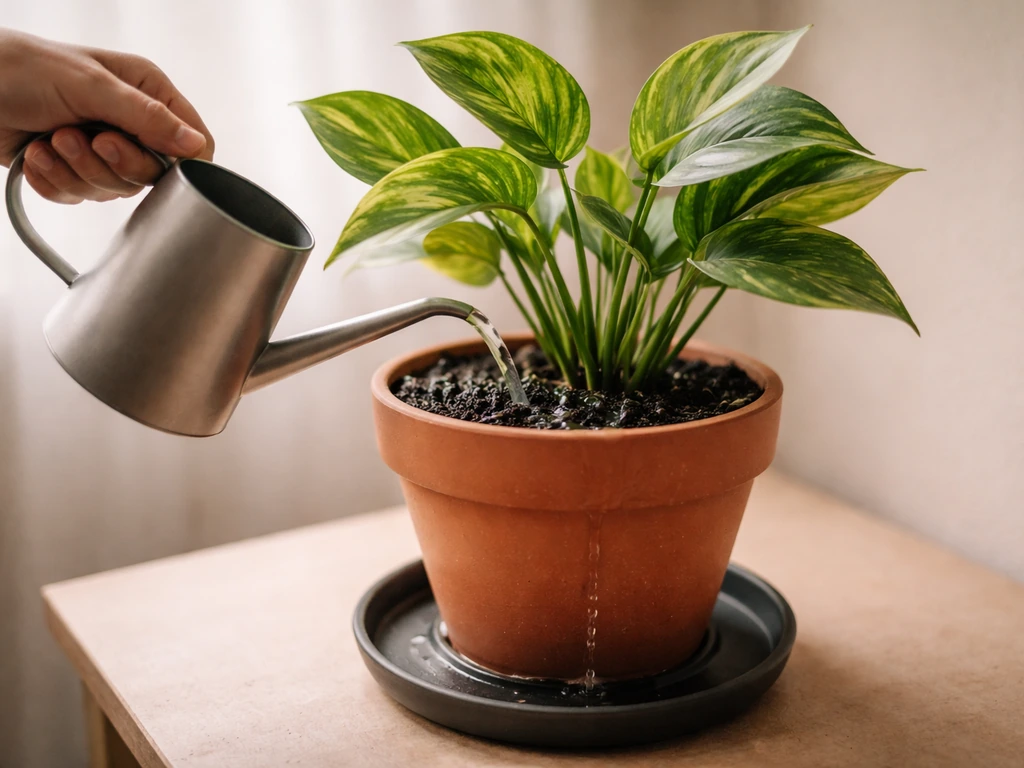
When you do water, water thoroughly until water drains freely from the holes at the bottom of the pot, then stop. That's the correct technique: enough water that it runs through the whole root zone and out the bottom, confirming the soil is evenly moist. Then wait. Let the soil dry to the appropriate depth for your plant before watering again. What kills most houseplants is the habit of giving a little water every day or two, which keeps the soil perpetually damp near the roots and invites rot. Water deeply and infrequently, and you'll avoid the number-one beginner mistake.
Common beginner problems and fast fixes
Yellow leaves
Yellow leaves are almost always overwatering, especially if the soil has been consistently moist. Other causes include insufficient light, cold temperatures, or poor drainage. Check the soil first: if it's been wet for more than a week, hold off on watering and make sure the pot has working drainage holes. If the pot is sitting in a saucer of standing water, empty it. One or two yellow leaves is normal plant behavior, but if multiple leaves are yellowing at once, overwatering is the most likely culprit.
Drooping or wilting
Wilting can mean either too much or too little water. Check the soil before you do anything. If it's wet, don't water and improve drainage. If it's bone dry, water thoroughly and the plant will usually recover within a day. With peace lilies, drooping reliably means thirsty. With snake plants or ZZ plants, drooping is more likely a root rot issue from overwatering.
Slow or no growth
Most houseplants go into a slow or dormant phase during winter, so if growth stalled between October and March, that's normal. Now that it's April, you should start seeing new growth on most of these plants as daylight increases. If a plant hasn't put out any new leaves in spring or summer, it usually means it needs more light or it's been in the same pot so long the roots are completely bound. Move it closer to a window first and see if that's the fix before repotting.
Pests (fungus gnats, spider mites, mealybugs)
Fungus gnats are the most common issue on this list, and they almost always come from consistently wet topsoil. Letting the soil dry out between waterings is the best prevention and treatment. Spider mites show up in dry, warm environments, and a periodic misting or gentle wipe-down of leaves helps. Mealybugs look like small cotton tufts, usually in leaf joints. Dab them with a cotton swab dipped in rubbing alcohol. Catching any of these early makes them easy to manage.
How to choose the right plant for your home today
Work through this simple decision flow to narrow it down to one plant for your specific setup:
- Do the shadow test in the spot where you want the plant. No shadow: go with snake plant, ZZ plant, or cast iron plant. Soft shadow: any plant on the list works. Sharp shadow: spider plant or pothos will thrive here.
- How often will you realistically water? Once a week or more: peace lily or spider plant. Every two weeks: pothos or snake plant. Sporadic or forgetful: ZZ plant or cast iron plant.
- Do you want flowers? Yes: peace lily. No preference: any of the others.
- Do you want fast, visible growth? Yes: pothos or spider plant. Don't care: snake plant, ZZ, or cast iron.
- Small space or apartment shelf? Pothos (trails nicely) or snake plant (stays upright and compact in smaller pots).
Once you've picked your plant, buy the smallest size available unless you already have a good-sized pot ready. A smaller plant in a correctly sized container will establish faster and be less likely to have drainage issues than a large plant crammed into too big a pot. Match pot size to root ball size, use a pot with drainage holes, and you've already avoided two of the most common setup mistakes.
If you want to expand beyond this starter list once you've got the basics down, there are a lot of directions you can go. plants that you can grow at home covers a broader range of options across different growing methods once you're ready to branch out. And if you're the kind of person who likes growing things with a backstory, it's worth knowing that what is the rarest plant in grow a garden is a fun rabbit hole once you've built some confidence with the easy stuff.
One more thing worth knowing: you don't need to spend much to get started. Many of these plants, especially pothos and spider plant, are easy to propagate from cuttings, meaning a friend or neighbor with one can give you a starter piece for free. And if you're curious about getting more plants started without a trip to a garden center, plants you can grow from grocery store is a surprisingly practical option that works well alongside the houseplants on this list.
Start with one plant, put it in the right light, water it deeply and then wait until the soil dries before watering again, and you'll almost certainly succeed. That single habit, watering less but more thoroughly, is the difference between the people who say they kill every plant they touch and the people who have thriving indoor gardens. Get that right and the rest follows naturally.
FAQ
What if my room is “low light” all day, not just in the evening?
Most of the plants listed can handle lower light, but they still need some usable light each day. If the room has no clear shadow from normal daylight or the plant sits more than a few feet away from a window with blinds often closed, growth will stall even if the plant stays alive. In that case, choose pothos or snake plant for the best odds, or plan to add a small grow light if you want steady growth.
Can I keep these easy plants in a bright sunny window?
Yes, but watch the leaves for signs. Sunny south or west windows can scorch pothos, spider plant, and ZZ plant if the light is direct. Filter it with a sheer curtain or place the plant slightly to the side of the sun beam, then reassess after 1 to 2 weeks for bleaching or crispy edges.
My plants never seem to dry out. What should I do?
Use the “dry depth” the plant prefers, not the calendar. If your potting mix stays wet longer than the normal interval (for example, it never fully dries by the recommended date), water less often and consider switching to a faster draining mix or a terracotta pot. Consistently soggy soil is the path to rot, even for drought-tolerant plants.
Brown leaf tips keep happening. Is it the tap water, and how do I confirm it?
Don’t follow the common tap water habit if your plant is showing brown leaf tips (notably with spider plant). Letting water sit overnight can help with chlorine, but fluoride and minerals may still build up. If tips keep worsening, switch to filtered or distilled water and flush the soil occasionally by running water through until it drains fully.
Can I repot these plants anytime, or do I need to wait for a season?
If you want to move from one “easy” plant to another, you generally can. But avoid potting a plant into a container that’s much larger than its root system because excess soil stays wet too long. A good rule is to keep the new pot only about an inch or two wider than the root ball and always use drainage holes.
If I’m going on vacation, which of these are most and least forgiving?
Most of the “easy” plants do fine with occasional travel absences, but the specifics differ. Snake plant and ZZ plant are the safest for longer gaps, pothos is usually forgiving, and peace lily is the riskiest because it relies on regular watering cues. If you will be away more than two weeks, plan extra drying time for ZZ and snake, and arrange someone to check peace lily and spider plant.
How often should I check for pests, and where exactly should I look?
Common pest checks matter more than treatment. Inspect leaf undersides and joints every couple of weeks, especially on spider plant runners and peace lily stems. Early mealybug and mite detection is usually a wipe and spot treatment, not an extended battle, and fungus gnats usually respond to drying and letting the top soil go dry.
My plant is dropping leaves. How do I tell overwatering from underwatering quickly?
If a plant is losing leaves, isolate the cause before changing everything. Yellowing with consistently wet soil points to overwatering, while yellowing with dry, crispy soil points to under-watering or light stress. For wilting, feel the soil first: wet means stop watering and improve drainage, dry means water thoroughly. This single soil check prevents the cycle of over-correcting.
Do I need fertilizer to keep these easy plants thriving?
Most beginners over-fertilize, which can cause salt buildup and weak growth even on hardy plants. If you fertilize at all, do it lightly during active growth (spring through summer), and pause if your plant is stressed from recent repotting, low light, or watering issues. When in doubt, skip fertilizer and correct light and watering first.
What’s the easiest way to propagate these plants at home, and when should I do it?
You can propagate pothos, spider plant, and sometimes ZZ by division, but timing affects success. Aim to propagate during spring or early summer when growth is active, use clean scissors, and let cut ends dry briefly for some plants before rooting. For pothos cuttings in water, change water regularly and move to potting mix once roots are a few inches long.
Next Article
Plants That Are Fun to Grow: Easy Picks by Season
Season and space friendly plants that are fun to grow: easy picks, light and care, timelines, and quick troubleshooting.